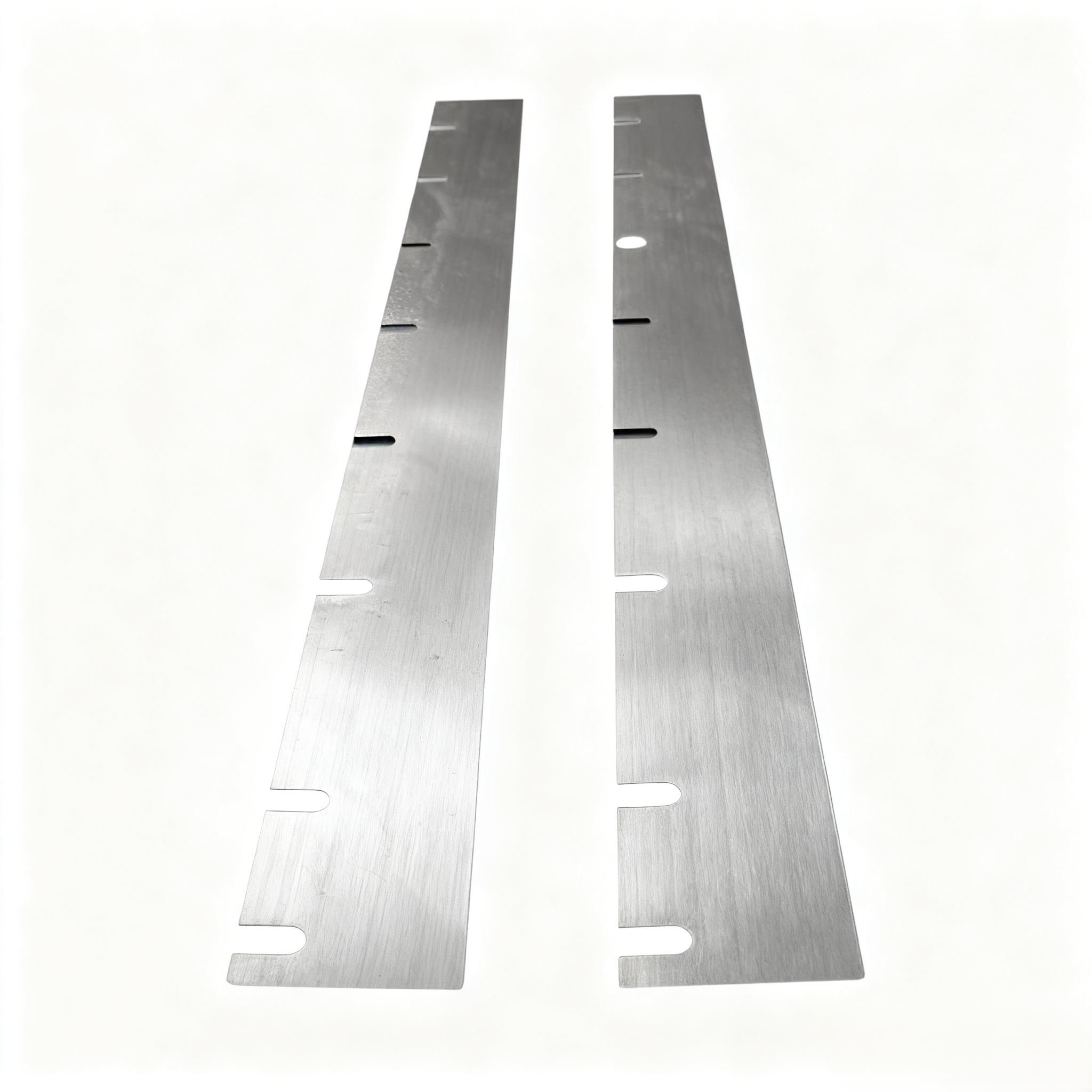

Essential details
MOQ:6 pieces
Product Introduction
Customized and adapted specifically for coating operations in the tin printing industry, it adopts high-quality materials such as Swedish high-carbon steel, alloy steel, ceramic coating and polyurethane. It is compatible with various tin printing coating materials including water-based, UV-curable and solvent-based types, and is widely used in industries such as canning, metal packaging and tin printing color coating. The blade edge undergoes precision grinding plus special coating treatment (nickel coating/ceramic coating optional), featuring self-sharpening properties. It can closely fit the printing plate without pre-grinding, achieving uniform scraping without streaks or missing coating, precisely controlling the coating thickness and avoiding defects such as fogging and trailing lines. The material boasts solvent corrosion resistance, wear resistance and oxidation resistance, capable of withstanding the high-frequency load of high-speed tin printing operations (machine speed above 180m/min), with a service life far exceeding that of ordinary doctor blades, reducing the cost of downtime for replacement. It perfectly matches tin printing machines of different brands such as Fuji and Heidelberg, balancing coating quality and production efficiency.
Tin Printing Coating Doctor Blades - High-Precision Coating Solution for Tin Can Printing & Manufacturing
Designed specifically for the tin can printing and manufacturing industry (including food cans, beverage cans, chemical cans, etc.), these blades are compatible with various coating application equipment. Featuring straight and precise cutting edges, wear resistance, and corrosion resistance, they ensure uniform coating without missing spots and consistent film thickness, meeting the high adhesion and flatness requirements of tin printing.
Core Advantages
- Precision Cutting Edge: Adopts CNC grinding technology with straightness error ≤0.005mm, achieving coating without sagging or scratches.
- Wear & Corrosion Resistance: Made of materials such as tungsten steel (carbide) and SKH-51 high-speed steel, with hardness ranging from HRC62 to 65, resisting coating corrosion and high-speed friction.
- Coating Adaptability: Compatible with multiple coating types including powder coating and liquid coating, stably controlling both thin and thick coatings.
- Easy Installation & Durability: Strong structural compatibility for convenient installation, excellent toughness to prevent edge chipping, and extending continuous equipment operation time.
Compatible with Major Brands
- SUNDER (Zhongshan): Suitable for tin printing coating production lines and fully automatic coating equipment.
- DONGFENG (Shantou): Compatible with supporting coating models of complete tin can manufacturing equipment.
- ZIMING (Shanghai): Fits high-precision tin printing coating machines and intelligent coating production lines.
- KBA (Germany, Koenig & Bauer): Adapts to imported integrated tin printing and coating equipment.
- Bobst (Switzerland): Compatible with high-end special coating models for tin can manufacturing.
- CHANGSHENG (Taiwan): Suitable for semi-automatic / fully automatic tin printing coating equipment.
- XINHONG (Dongguan): Fits coating models for small-scale tin printing factories.
Core Parameters
- Material: Tungsten steel (carbide), SKH-51 high-speed steel, Cr12MoV alloy tool steel.
- Hardness: HRC60-65 (adjustable on demand).
- Size: Length 80-1600mm, thickness 1-8mm (customizable).
- Applicable Coatings: Powder coating, epoxy coating, polyester coating, food-grade safe coating, etc.
Customization & After-Sales
- Customization Services: Tailor cutting edge angle and size specifications according to equipment model, coating thickness, and coating type. 1-3 days for solution development, 7-15 days for delivery.
- After-Sales Support: 3-12 months warranty (by material). Each blade undergoes cutting edge precision and hardness inspection before delivery, providing installation and commissioning guidance as well as doctor blade repair service.